The Crown Jewel of Honolulu’s Arts Scene
In a city defined by its breathtaking natural beauty and a rich, multi-layered cultural tapestry, Honolulu boasts several modern event venues and contemporary staging facilities. Yet, none command the emotional reverence, historic weight, or pure aesthetic magic of the Hawaii Theatre Center. From the moment its grand neoclassical facade welcomes you beneath a roaring neon marquee in the historic Chinatown district, the theater transcends the identity of a mere entertainment venue—it functions as a time capsule, an architectural marvel, and a community sanctuary.
For over a century, this theater has hosted everything from silent films and wartime vaudeville troupes to world-renowned musicians, local symphonies, stand-up comedians, and sacred Hawaiian cultural ceremonies. It is the unique intersection of its flawless technical layout, profound historic preservation, and an unforgettable, atmospheric patron experience that makes the Hawaii Theatre the definitive premier theater in Honolulu.
A Century of Architectural and Acoustic Splendor
To understand why the Hawaii Theatre remains unrivaled, one must look to its physical structure. Commissioned by the Consolidated Amusement Company and designed by the legendary Honolulu architectural firm Emory & Webb, construction began in the midst of a changing post-World War I landscape. When its doors officially swung open on September 6, 1922, local media immediately deemed it an artistic achievement equal to the most lavish showplaces of San Francisco and New York.
The Beaux-Arts and Art Deco Synthesis
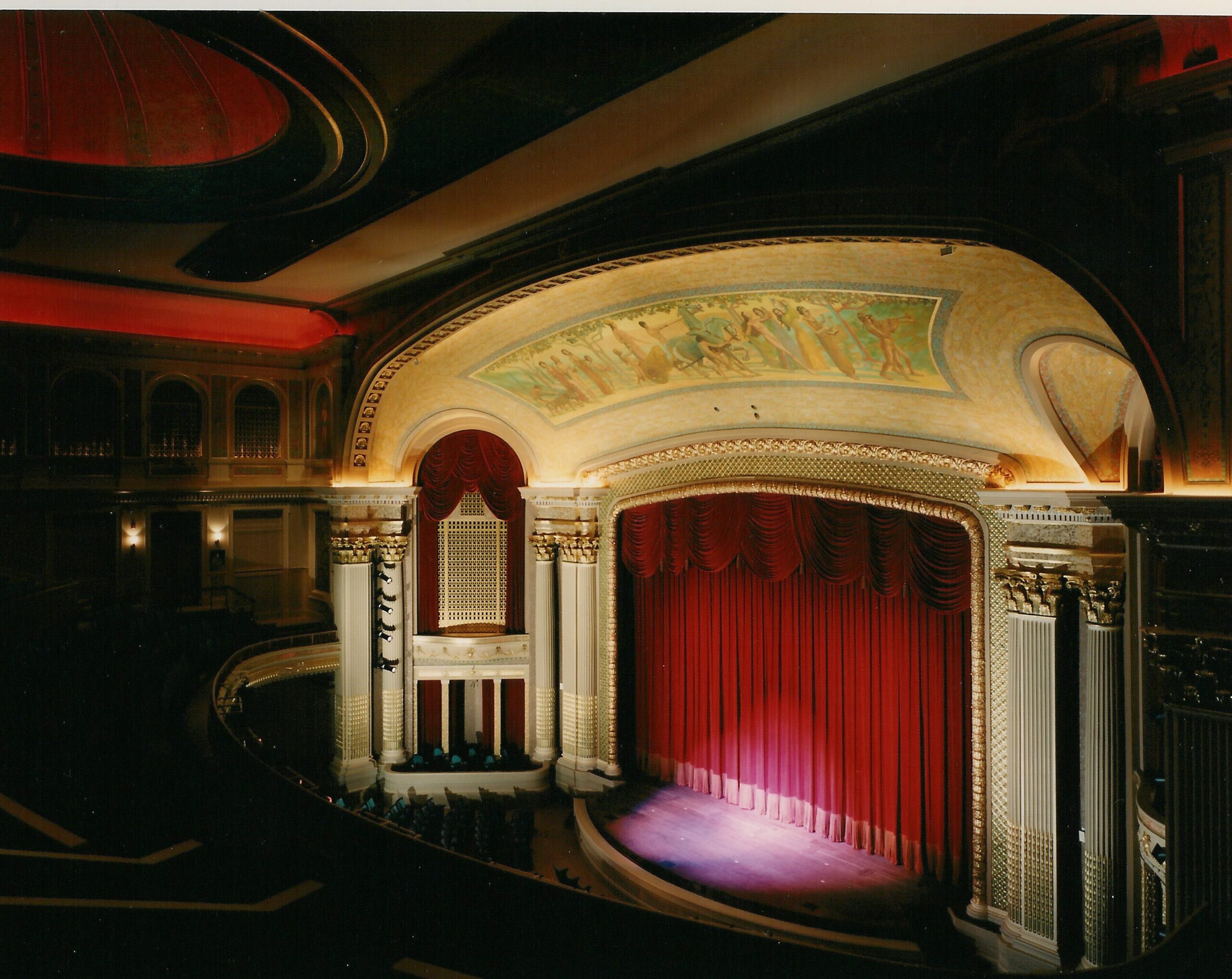
The exterior exhibits a majestic Classical Revival style, characterized by Corinthian pilasters and massive, round-arched windows. However, it is the interior that takes a spectator’s breath away. Designed in a rich panoply of Beaux-Arts architecture, the auditorium is a masterclass in theatrical opulence:
- The Gilded Dome: A towering, 75-foot-high recessed acoustical ceiling dome anchors the room, adding a cathedral-like verticality to the space.
- The Proscenium Arch: Framed by massive Corinthian columns, the stage opening features a monumental 40-by-12-foot mural by celebrated artist Lionel Walden titled The Glorification of Drama.
- Intricate Detailing: Ornate plaster moldings, marble statuary, silk hangings, and prominent bronzed-plaster bas-reliefs depicting Shakespeare’s Hamlet and Portia line the walls, surrounding audiences with classical muses.
- The 1938 Marquee: Updated during the height of the Art Deco movement, the building’s exterior boasts a two-story vertical neon sign and marquee that remains the most recognizable luminous landmark in downtown Honolulu.
A Perfect Acoustic Ecosystem
Beyond visual majesty, Emory & Webb engineered the space with a deliberate, shallow, and wide auditorium configuration featuring a single sweeping balcony and private loge boxes. The dome was not merely decorative; it was contoured to naturally amplify acoustic sound waves.
This meticulous geometry ensures that spoken dialogue or an unamplified acoustic guitar string plucked on stage naturally radiates to the furthest rows of the upper balcony without muddying echo. It was also pioneering in comfort, using an early, innovative ventilation system that blew cool air from an underground ice chamber through vents located directly under the seats.
Nationally Recognized Excellence: Awards and Accolades
The excellence of the Hawaii Theatre is not merely a matter of local opinion. It has been institutionalized by some of the highest preservation and business authorities in the United States
Institutional Honors
The theater’s exceptional journey from a state of neglect in the mid-1980s to its triumphant 1996 re-opening culminated in massive national recognition:
- Outstanding Historic Theatre in America (2005): Awarded by the League of Historic American Theatres, this prize recognized the venue as the country’s most exceptional example of historic theatrical restoration, praising its structural integrity and community utilization.
- The Honor Award for National Preservation (2006): The National Trust for Historic Preservation bestowed its highest accolade upon the theater, citing the meticulous restoration of Lionel Walden’s mural and the building’s structural stabilization.
- State and National Registers of Historic Places: The building was permanently added to these protective ledgers, confirming its status as an irreplaceable American treasure.
Leadership and Ethics Awards
A theater is only as strong as the hands that guide it. The management of the Hawaii Theatre Center has been routinely lauded for executing a sustainable, culturally respectful non-profit business model:
- BBB Torch Award for Business Ethics (2006): The Hawaii Better Business Bureau presented this prestigious award to the Hawaii Theatre Center. Strikingly, it marked the first time a small non-profit organization in the state of Hawaii received the honor, highlighting the leadership’s transparency, fiscal responsibility, and community trust.
- The Po‘okela Awards: On a regional level, productions and technical crews operating within the Hawaii Theatre are routinely recognized by the Hawaii State Theatre Council’s Po‘okela Awards, celebrating top-tier local achievements in sound design, lighting, direction, and theatrical performance.
- The Fire Award: On a local level, this award bestowed by the Pacific Business News recognized the Theatre’s enduring committment to inspirational programming and the importance the Theatre plays in promoting Hawaiian arts and culture performances for locals and visitors alike.
The Performer’s Perspective: Staging Magic
For artists, step-entering the Hawaii Theatre is a career milestone. The venue boasts a rare technical capacity that marries old-world aesthetics with 21st-century production capabilities.
The Grand Robert Morton Pipe Organ
One of the theater’s secret weapons is its fully operational, historic 1921 Robert Morton pipe organ. It is the last remaining instrument of its size in Hawaii still installed in its original theater setting. For musicians and touring organists, playing this instrument—which can rise dramatically from the orchestra pit on a motorized platform—is a transformative experience.
Artist Testimonials
Performers frequently comment on the unique intimacy the room provides despite its grand footprint. Because the seating bowls are wide and shallow, artists face what feels like a literal wall of human energy.
Touring singer-songwriters, traditional Hawaiian kumu hula, and rock musicians have long noted that the room behaves like a massive wooden instrument. Sound travels effortlessly from the stage monitors, creating a feedback loop of crystal-clear acoustics that allows performers to drop their microphones and sing unamplified, connecting deeply with the audience. The subterranean dressing rooms, etched with the signatures of legendary vaudeville stars and modern celebrities alike, offer a backstage environment steeped in artistic brotherhood. The Theatre has hosted international stars such as the Beach Boys, Arlo Guthrie, Judy Collins, Cynthia Erivo and Sutton Foster to name just a few.
The Patron Experience: Stepping into Another Era
For the ticket holder, an evening at the Hawaii Theatre is a fully realized sensory event that begins long before the house lights dim.
An Immersive Atmosphere
Patrons consistently point out the transformative quality of the space. As noted by elite local reviewers on platforms like Yelp and TripAdvisor, walking into the auditorium instantly transports you out of the bustling, modern downtown city streets and into an era of soft elegance, gilded history, and timeless artistry. The meticulously maintained velvet seating, grand staircases, and second-floor lounge areas offer a luxury experience missing from contemporary multiplexes.
Patrons also frequently highlight the unique “adult sippy cups” available at the second-floor bar, which allow theatre-goers to responsibly enjoy premium cocktails and wine at their seats during a show without risking spills on the historic fabrics. While taller guests occasionally remark on the vintage, cozy legroom in the absolute highest rows of the upper balcony, they quickly concede that the perfect visibility and unmatched audio dynamics more than make up for the historical proportions of the seating.
A Living Bastion of Hawaiian Culture and Community
What truly cements the Hawaii Theatre as the absolute best venue in Honolulu is its unwavering commitment to the community. It refuses to be an elite, detached museum piece. Instead, under the guidance of the Hawaii Theatre Center non-profit board and executive staff, it serves as a highly active public resource that welcomes 100,000 to 120,000 patrons annually.
Empowering Indigenous Art
The theatre has evolved into a vital platform for native Hawaiian storytelling, language preservation, and indigenous performing arts. It frequently plays host to groundbreaking Hawaiian language plays (hana keaka), traditional mele (music) concerts, and the prestigious Na Hoku Hanohano Awards (Hawaii’s equivalent of the Grammy Awards). By giving indigenous arts a stage of national-landmark caliber, the theater helps ensure that the living culture of Hawaii remains vibrant and central to downtown Honolulu.
Accessible History
Through regular guided historical tours led by passionate local docents, the theater opens its doors to school children, historians, and tourists. Guests can witness the inner workings of the historic stage, explore the basement archives, and listen to the thunderous roar of the Robert Morton pipe organ outside of standard show times, making history tangible and democratic.
The Unrivaled Icon of Oahu
The definition of a great theater extends far beyond its stage dimensions or the modern brightness of its lights. A truly great theater holds the memories of a community, elevates the work of the artists who grace its stage, and leaves the patron breathless before the performance even begins.
The Historic Hawaii Theatre fulfills all of these criteria flawlessly. Backed by elite architecture, sweeping national preservation awards, ethically sound local leadership, and unyielding praise from performers and audiences, it remains an irreplaceable jewel. It is not merely a place to watch a show; it is an enduring monument to the soul of Honolulu, solidifying its rightful place as the finest theater in the Pacific.